Why are rings called rings?
The word “ring” has a rich etymological history that dates back to ancient times. This reflects the object’s enduring significance in human culture. The term “ring” is derived from the Old English word “hring”. And “hring” itself evolved from the Proto-Germanic word “*hrengaz”. It is believed that this Proto-Germanic root is related to the verb “*hrenganan”, which means “to bend” or “to bend”.


The round shape of the ring is key to understanding its name. In many ancient cultures, the circle was a symbol of eternity and continuity. This symbolism made the ring particularly important in rituals and ceremonies related to marriage and commitment.
The concept of the ring can be traced back to ancient civilizations such as Egypt, Greece, and Rome. In these societies, rings served a practical and symbolic purpose as well as a decorative purpose. In Egypt, the pharaohs wore rings as a symbol of power and authority. Roman rings were engraved with gemstones and used as seals for important documents.
Over time, The use of rings spread to different cultures and continents, each adding their own unique traditions and meanings. In medieval Europe, rings became an essential part of courtly love and chivalry, often exchanged as tokens of affection and fidelity. The Renaissance saw the emergence of elaborate and ornate rings adorned with gemstones and intricate designs, reflecting the flourishing of art and culture of the time.
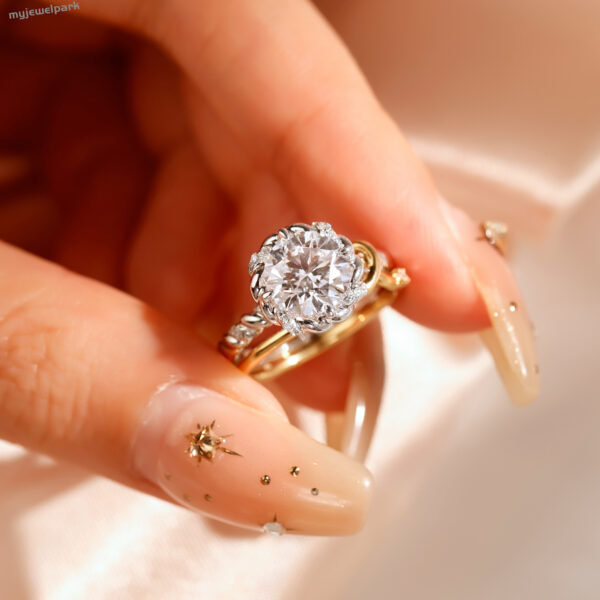
Today, the word “ring” continues to evoke a sense of tradition and emotion. Whether it’s a simple gold band or an ornate diamond engagement ring, the round shape remains a powerful symbol of unity, commitment, and everlasting love. The enduring popularity of rings in modern society is a testament to their timeless appeal and the deep-rooted cultural significance they carry.