The formation of emerald can be said to be a miracle of nature. The crystal of the rough stone is naturally small, and the rough stone of emerald has many cracks and inclusions. This characteristic also makes the emerald easy to break during the cutting process. The reason why most masters dare not cut emeralds is that the crystal of emerald has many cracks and cotton, which is easy to cut.
If you are not careful, the rough stone of emerald will be broken. Usually, it is rare to retain a quarter of the gross weight of the rough stone after the emerald is cut, not to mention half.
That is to say, it is very rare for an 8-carat rough emerald to reach a weight of 2 carats after cutting. Moreover, if the quality of the rough emerald is not low, it is very rare to see a rough emerald with very little weight left after cutting. With such a high loss rate, it is very rare to get a large carat emerald, because such a large rough emerald is very rare.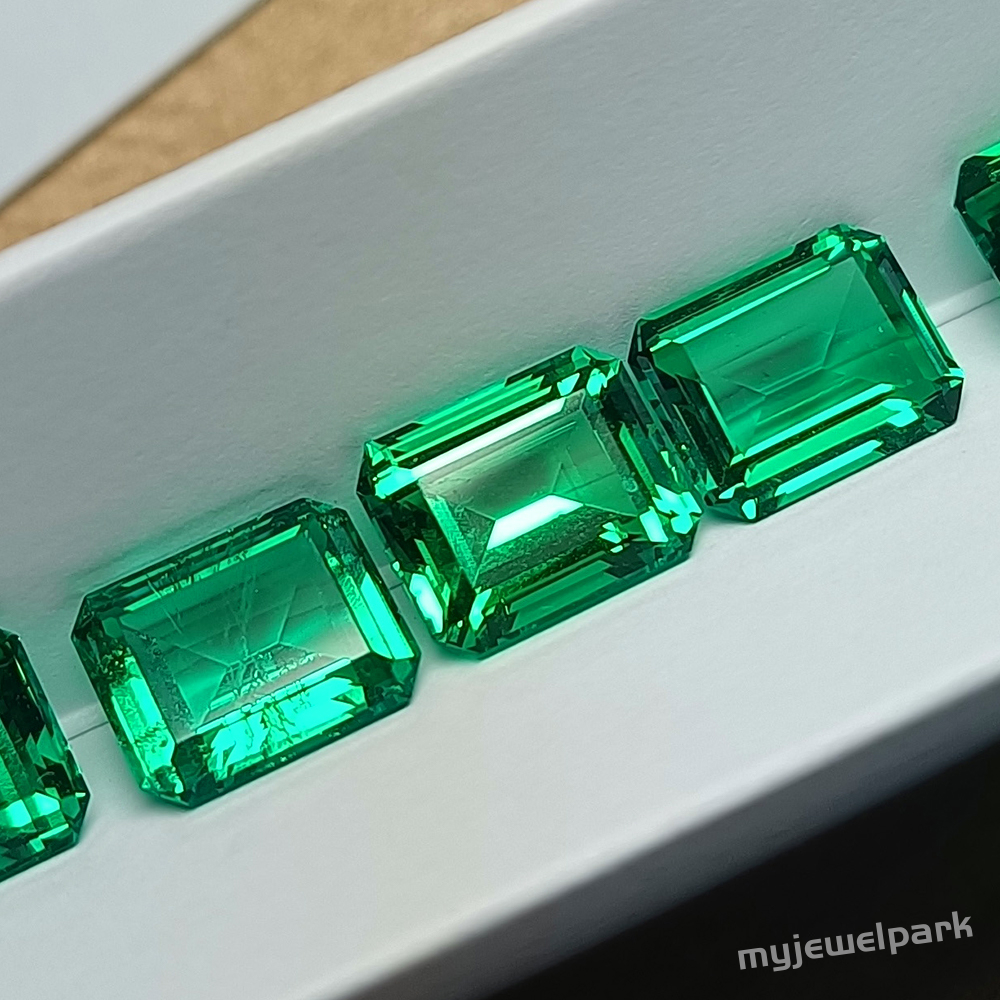
Cultured emeralds also have inclusions. Although most cultured emeralds are purer than natural ones, cultured emeralds are generally cut with precision. However, natural emeralds are mainly cut to preserve weight, and generally can rarely be cut with precision. Precision-cut emeralds are very expensive. In order to achieve the ideal cut, precise gems often need to discard more roughs, resulting in greater losses.
Therefore, if this 213-carat cultured emerald rough can reach 80 carats after cutting, it is already very good. Is the loss rate of gem cutting much greater than we imagined?