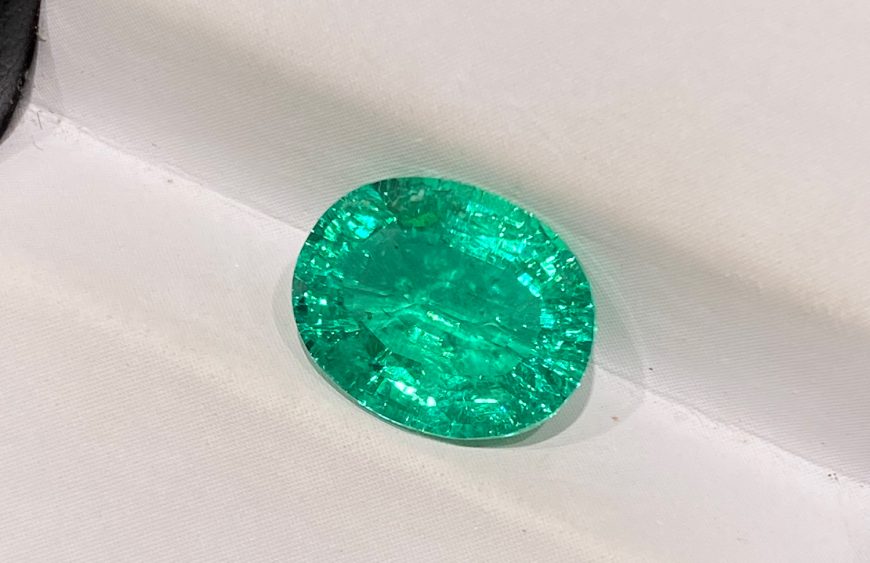
Identifying the authenticity of emeralds is an important part of maintaining the investment value of jewelry. With the market flooded with imitations, it is particularly important to learn how to identify the authenticity of emeralds.
1. Observe the color
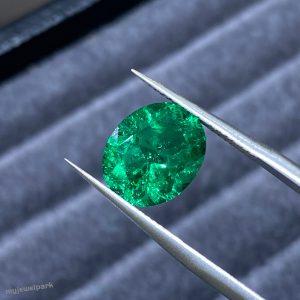
Natural emeralds are bright and uniform in color, usually dark green with soft blue or yellow tones, and have some internal inclusions and textures that show their natural formation characteristics. If the color is too bright or appears extremely uniform, it may be fake or treated synthetic stones.
2. Check for internal inclusions
Observe the internal structure of the emerald through a magnifying glass or microscope. Natural emeralds will have natural inclusions such as bubbles, mineral impurities and textures. If the stone appears clean and transparent without any impurities, it may be synthetic or imitation.
3. Understand the refractive index
The refractive index of emeralds is between 1.577-1.583. You can use a refractometer to measure the refractive index. Natural emeralds will show a specific measurement. Fakes or other alexandrites may have a different refractive index.
4. Perform UV test
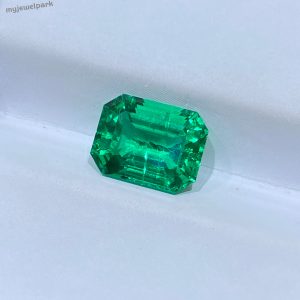
Under UV light, real emeralds will not have obvious fluorescence reaction, while synthetic emeralds or treated stones may glow. Note that even some natural emeralds may have slight fluorescence, but it is usually not as obvious as treated stones.
5. Ask for professional appraisal:
If you are still unable to confirm the authenticity of the emerald, it is recommended to send it to a professional jewelry appraisal agency for appraisal. Professional agencies can provide authoritative certificates to ensure that your purchase is trustworthy.
Identifying the authenticity of emeralds is an important part of maintaining the investment value of jewelry, and it is crucial to ensure that the emerald you purchase is real. I hope the above suggestions are helpful to you.