The ‘Oil Slick’ Effect in Moissanite: What You Need to Know
Moissanite has gained immense popularity as a diamond alternative, known for its brilliance, fire, and affordability. However, some buyers notice an unusual optical phenomenon in their moissanite stones—the “oil slick” effect. This effect, which appears as rainbow-like hues on the surface, has sparked curiosity and debate among gemstone enthusiasts. So, what causes it, and should you be concerned?
What Is the Oil Slick Effect?
The oil slick effect in moissanite manifests as an iridescent sheen that can resemble the look of an oil spill on water. This phenomenon is most noticeable under certain lighting conditions and at specific angles. Unlike diamond, which typically reflects light in a uniform way, moissanite’s high refractive index (2.65) and double refraction can sometimes contribute to these colorful patches.
What Causes This Iridescence?
Several factors contribute to the oil slick effect:
Coating Residue: Manufacturing processes sometimes leave behind microscopic coatings or residue that can create a thin-film interference effect, similar to how soap bubbles produce rainbow colors.
Surface Durability: While moissanite scores 9.25 on the Mohs hardness scale, making it highly scratch-resistant, small surface abrasions can scatter light and produce iridescent reflections.
Double Refraction: Moissanite’s natural birefringence can enhance light dispersion, occasionally leading to subtle color shifts on the surface.
Improper Cleaning: Buildup from lotions, soaps, or cleaning agents can alter the way light interacts with the stone.
Is the Oil Slick Effect a Defect?
The oil slick effect is generally not a flaw or defect in moissanite, but rather a natural occurrence in some stones due to their optical properties. However, buyers should be aware that lower-quality moissanite or stones with inconsistent polishing may be more prone to exhibiting this effect. Most high-quality moissanite manufacturers, such as Charles & Colvard and Harro Gem, ensure rigorous quality control to minimize surface irregularities.
Can You Prevent or Remove the Oil Slick Effect?
If you notice this effect on your moissanite, try the following solutions:
Proper Cleaning: Regular cleaning with a mild detergent and a soft brush can remove residue that may be contributing to the effect.
Ultrasonic or Steam Cleaning: Professional cleaning can help eliminate stubborn films.
Repolishing: In rare cases, a jeweler can perform light repolishing to reduce iridescence.
Why Lab Grown Moissanite Is Still a Smart Choice
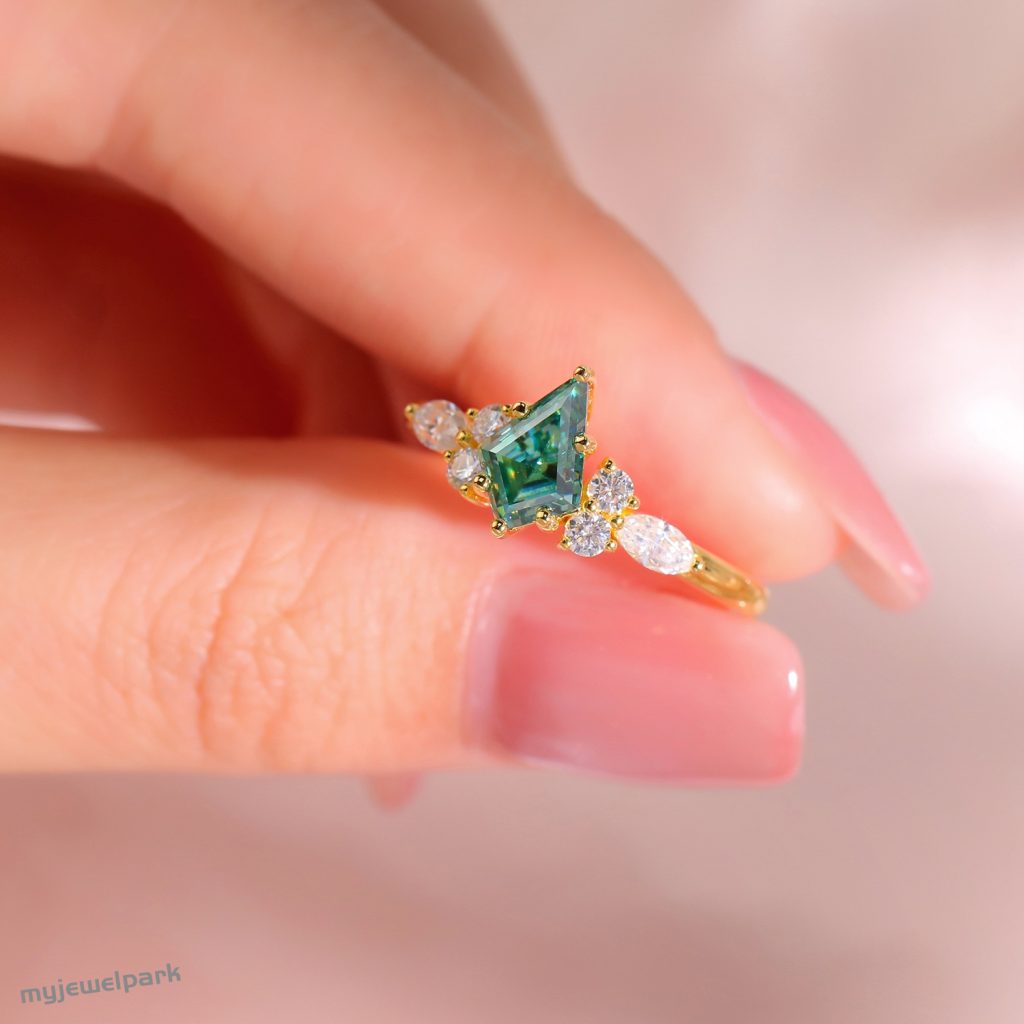
Despite occasional quirks like the oil slick effect, lab-grown moissanite remains a top choice for eco-conscious and budget-savvy buyers. Unlike natural diamonds, which require extensive mining, moissanite is ethically produced with minimal environmental impact. Additionally, modern advancements in gemstone technology have refined the manufacturing process, making lab-created moissanite nearly indistinguishable from natural diamonds to the untrained eye.
Consumer Psychology: Why More People Are Choosing Moissanite
With sustainability and affordability driving modern purchasing decisions, moissanite’s popularity continues to soar. Studies indicate that millennials and Gen Z buyers are shifting away from traditional diamonds in favor of high-quality lab-created alternatives. The social acceptance of lab-grown gemstones has increased significantly, as consumers recognize that optical brilliance and durability do not have to come at the cost of ethical concerns.
Thoughts
While the oil slick effect in moissanite can be a minor concern for some buyers, it is not a sign of poor quality. Understanding what causes it and how to manage it ensures you can enjoy the brilliance of your moissanite ring for years to come. Have you experienced the oil slick effect in your moissanite? Share your thoughts in the comments below!