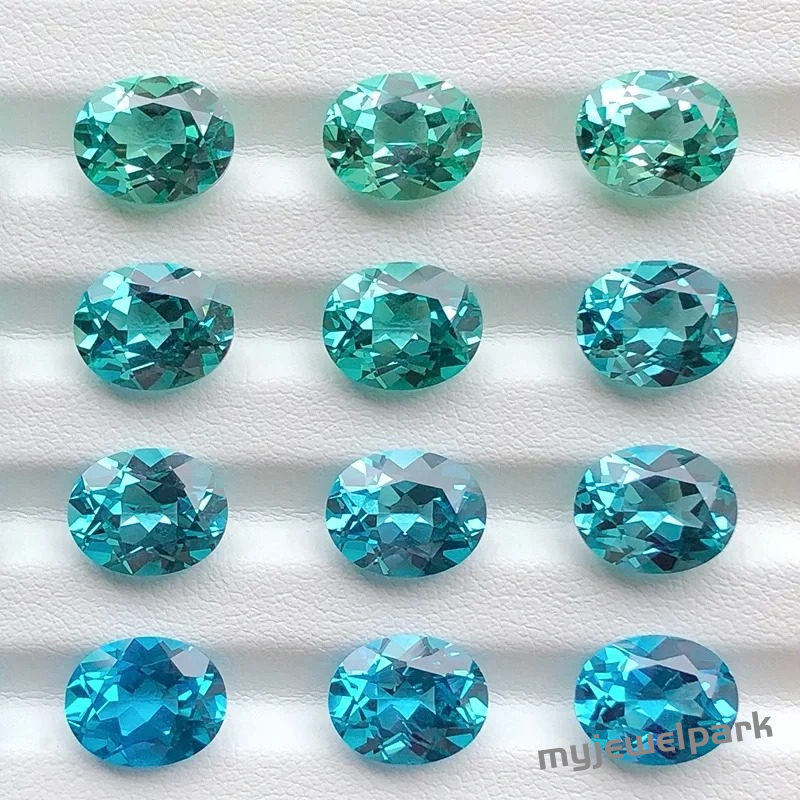
Paraíba Tourmaline is a very rare and highly sought-after gemstone known for its unique neon blue-green color. As technology advances, lab-grown Paraíba Tourmaline has attracted consumer attention.
Can Paraíba Tourmaline Really Be Grown?

The answer to the question, “Can Paraíba Tourmaline Really Be Grown?” is a resounding yes. Advanced technology has allowed labs to successfully create synthetic gemstones that resemble natural Paraíba Tourmaline. These synthetic gemstones are not only attractive in appearance, but also produced in a controlled process that meets the market’s high demand for color and clarity.
Synthesis Methods
The key to lab-grown Paraíba Tourmaline is the ability to accurately replicate the source of its unique color. These synthetic gemstones can be chemically very similar to natural Paraíba Tourmaline and can even mimic its unique color and luster. They are synthesized using techniques such as hydrothermal, flux-grown, and vapor deposition. Synthetic stones have not undergone natural geological changes, and their internal characteristics and structures are different from those of natural stones.
Disguise and counterfeiting
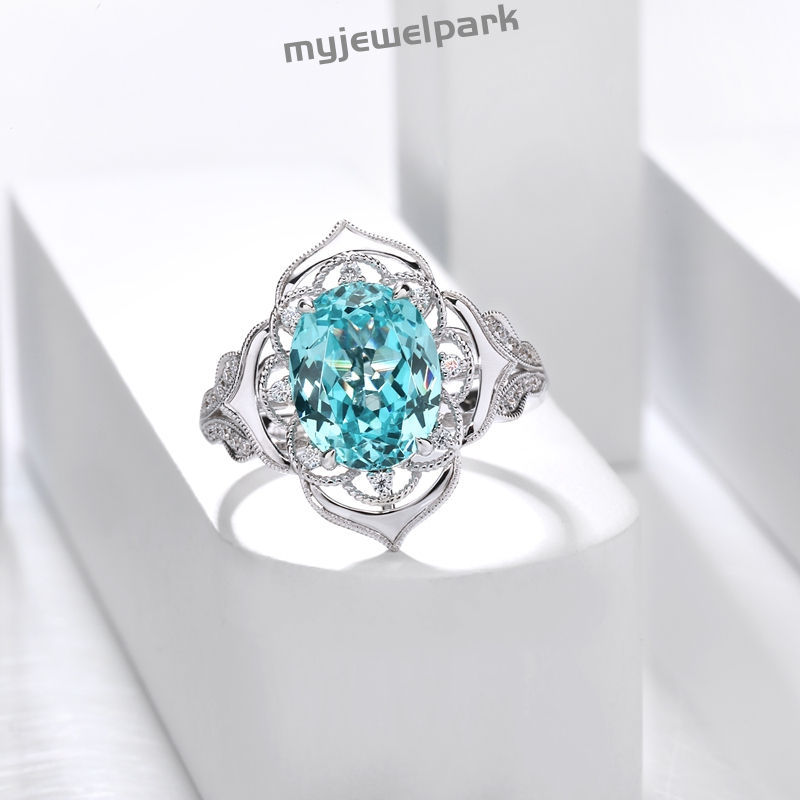
However, some controversy has also emerged in the market. For example, the statement that “cultivated gems are actually faked with garnets.”
The reason is that unscrupulous merchants use synthetic garnets with strengthening technology. Make it look similar to Paraiba tourmaline to mislead consumers. The composition and chemical properties of garnet are different from those of Paraiba tourmaline. This disguise is extremely misleading and easy to confuse consumers.
Both laboratory-synthesized Paraiba tourmalines and natural Paraiba tourmalines are attractive in appearance, but there are significant differences in market value and gemstone uniqueness. Consumers should carefully distinguish when purchasing.