Why Does My Lab Alexandrite Look Purple?
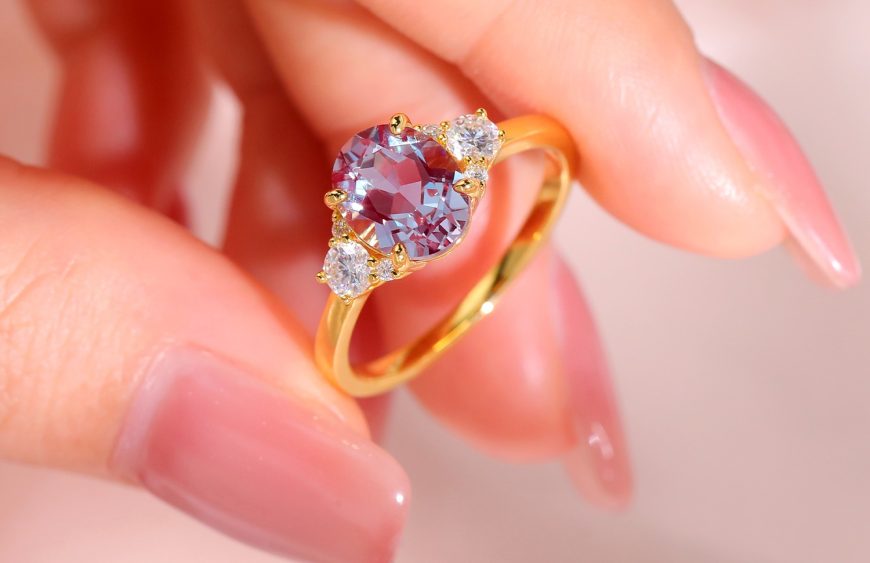
If you own a lab-grown Alexandrite, you’ve probably noticed its mesmerizing color shift—from greenish-blue in daylight to reddish-purple under incandescent light. But some people are surprised when their Alexandrite leans more toward purple hues than deep red or green. So why does this happen? And what does it say about the science behind this rare and fascinating gemstone?
The Science Behind Alexandrite’s Color Change
Alexandrite is a type of chrysoberyl known for its extraordinary color-changing effects. This effect stems from its unique ability to absorb and reflect different wavelengths of light. This effect, called the alexandrite effect, is due to the presence of chromium in the crystal structure, which interacts with light in a highly specific way.
Natural Alexandrite is prized for its dramatic shift between bluish-green in daylight and deep red in incandescent light. However, many lab-created Alexandrites exhibit a stronger purple or violet tone, leading some buyers to wonder if their gemstone is different from a mined one.

Why Does Lab Alexandrite Look More Purple?
Differences in Chemical Composition
While both natural and lab-grown Alexandrites contain chromium, some synthetic versions may have slightly different trace elements that influence color balance.
Some lab-created Alexandrites are grown using the Czochralski method, which can produce a more purple-tinted red under warm light sources.
Lighting Conditions Matter
The type of artificial lighting used can greatly affect the perceived color of Alexandrite.
Many modern LED lights do not mimic traditional incandescent light, which enhances the red shift in natural Alexandrite.
Fluorescent or cool LED lighting can make Alexandrite appear more violet or bluish rather than deep red.
Variability in Growth Techniques
Some lab-grown Alexandrites are engineered to intensify their color change, which can sometimes push the red spectrum toward a more purple hue.
Different manufacturers use slightly varying growth conditions, leading to subtle variations in the final gemstone’s color response.
Is Purple Lab Alexandrite Still a “Real” Alexandrite?

Absolutely! Lab-grown Alexandrite is chemically identical to natural Alexandrite and undergoes the same color-changing effect—just with minor variations in hue due to its controlled formation. Many collectors and jewelers actually find the deeper purple tones highly desirable.
The Psychological Appeal of Lab-Grown Alexandrite
The magic of Alexandrite lies in its transformative nature. People are drawn to it because of its mysterious, chameleon-like quality. Studies show that wearers of color-changing gemstones feel a stronger emotional connection to their jewelry, as the shifting hues symbolize change, adaptability, and uniqueness.
Moreover, lab-created Alexandrites offer sustainability and affordability without sacrificing beauty. With ethical sourcing becoming a major concern, many consumers now prefer conflict-free, lab-grown gemstones over mined alternatives. According to research by MVI Marketing, over 70% of millennial buyers consider lab-grown gemstones a smart choice due to their eco-friendly and cost-effective advantages.
Should You Be Concerned About the Purple Hue?
If your lab-grown Alexandrite appears more purple than red, it’s likely due to lighting conditions or slight variations in its chemical makeup—but it remains a genuine Alexandrite with the same optical magic.
Would you choose a lab-grown Alexandrite over a natural one? Do you find the purple hues more appealing? Join the conversation in the comments below!