Why Is Lab-Grown Alexandrite More Affordable? Unveiling the Price Gap
Alexandrite, known for its mesmerizing color-changing effect, has long been one of the most coveted gemstones in the world. Natural alexandrite is not only rare but also extremely expensive, often costing thousands of dollars per carat. However, lab-grown alexandrite offers an affordable alternative without compromising on beauty or durability. But what exactly causes this price gap? Let’s explore the science, economics, and psychology behind the affordability of lab-created alexandrite.
The Rarity Factor: Natural vs. Lab-Grown Alexandrite
One of the biggest reasons for the high price of natural alexandrite is its rarity. This gemstone forms under very specific geological conditions, requiring both beryllium and chromium—two elements that rarely occur together in nature. This scarcity makes high-quality natural alexandrite almost as rare as diamonds or even more so.
In contrast, lab-grown alexandrite is created using advanced crystal growth techniques such as the Czochralski or flux fusion method, which replicate the natural formation process but in a controlled environment. Because these conditions can be consistently reproduced, lab-grown alexandrite is more readily available, leading to a significantly lower price per carat.

The Cost of Mining vs. Lab Production
Mining natural alexandrite is an expensive and labor-intensive process. Extraction involves heavy machinery, skilled labor, and significant environmental impact. Furthermore, natural alexandrite deposits are found in only a few locations worldwide, such as Russia, Brazil, and Sri Lanka, which adds to the logistical costs of mining and transportation.
On the other hand, lab-grown alexandrite is produced in a controlled setting without the need for extensive excavation. Modern technological advancements allow for high-quality gemstone synthesis at a fraction of the cost of traditional mining. These savings are passed on to consumers, making lab-grown alexandrite a more budget-friendly option.
Psychological Perception: Does a Lower Price Mean Lower Value?
Many consumers associate high prices with rarity and exclusivity. Natural gemstones often carry an emotional or historical appeal, leading buyers to see them as luxury items. However, recent trends show that consumer perception is shifting. Millennials and Gen Z, who prioritize sustainability and ethical sourcing, are increasingly drawn to lab-grown gemstones.
According to a 2023 survey by MVEye, a market research firm specializing in jewelry trends, over 70% of consumers expressed a willingness to buy lab-grown gemstones if they exhibited the same beauty and durability as their natural counterparts. This growing acceptance is reducing the stigma around lab-created gems and positioning them as a smart, ethical choice.

Advancements in Lab-Created Gemstones: Virtually Indistinguishable
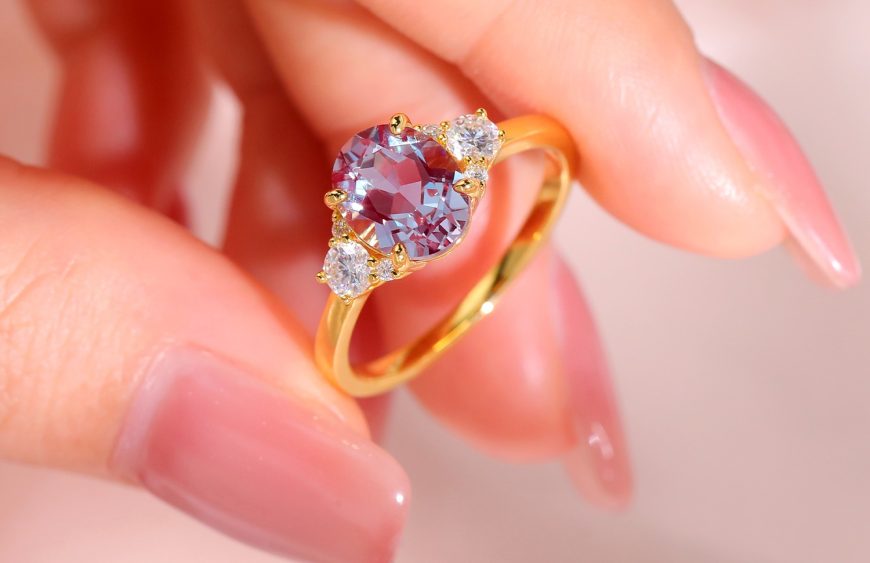
A common misconception is that lab-grown gemstones look “fake” compared to natural ones. However, modern technology has made it possible to replicate natural inclusions, growth patterns, and even the unique color shifts of high-quality alexandrite. In the same way that lab-grown emeralds now feature the same internal characteristics as their natural counterparts, lab-grown alexandrite mimics the finest natural specimens—without the exorbitant cost.
Final Thoughts: A Smarter Choice?
The affordability of lab-grown alexandrite comes down to controlled production, ethical sourcing, and technological advancements that allow for gemstone creation without the limitations of natural formation. While traditionalists may still prefer mined stones for their historical appeal, a growing number of buyers see lab-grown alexandrite as a high-value, sustainable, and budget-friendly alternative.