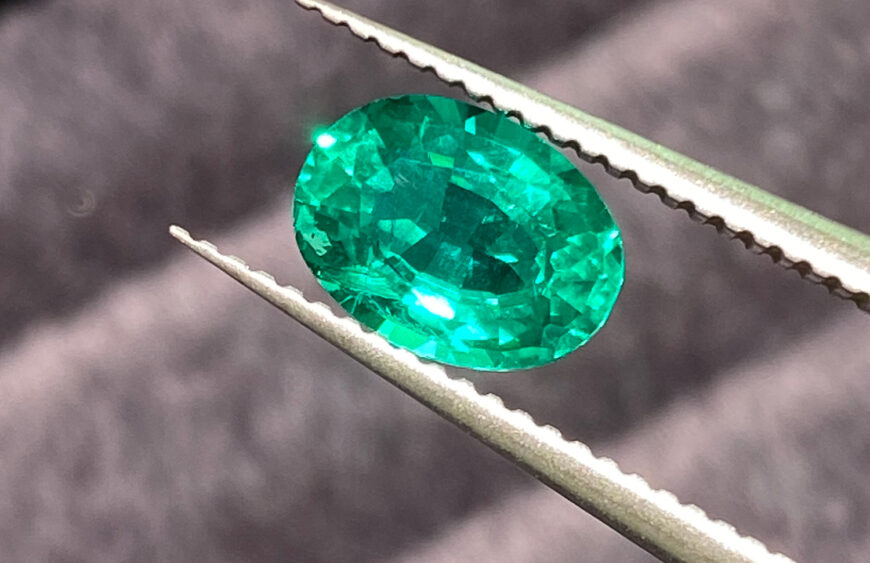
Why Is Emerald Ore So Rare?
Emeralds are one of the most valuable gemstones in the world, yet they are far rarer than diamonds or sapphires. The reason lies in the specific and unlikely conditions required for emeralds to form. Unlike other gemstones that appear in large deposits, emeralds grow only when the right chemical elements meet in just the right geological environment. These conditions exist in very few places on Earth.
How Emeralds Form in Nature
Emeralds are a variety of beryl, colored green by the presence of chromium, vanadium, or both. The problem is that beryllium and chromium rarely exist in the same location. Beryllium is typically found in granitic rocks, while chromium forms in ultramafic or metamorphic rocks. For emeralds to grow, these contrasting environments need to interact under high temperature and pressure. This happens only in unique geological zones, such as those found in Colombia, Zambia, and Brazil.
Because of these challenges, emerald ore is usually found in narrow veins or isolated pockets rather than broad mineral belts. The extraction process is labor-intensive and low-yield. According to data published by the United States Geological Survey, only about 1% of emerald-bearing rock yields gem-quality material suitable for cutting and jewelry.

Public Debate on Rarity and Value
The scarcity of emerald ore contributes to its high price, but not everyone agrees on what makes an emerald valuable. On popular forums like Reddit and PriceScope, users often question whether the high cost is driven by actual rarity or industry hype. Some argue that since emeralds are frequently treated with oils or resins to improve clarity, their value should be adjusted. Others defend the pricing, citing the risk and difficulty of mining genuine emerald ore.
One Reddit thread featured a buyer frustrated after paying a premium for a stone later revealed to have multiple surface fractures. The post led to a discussion on how the fragile nature of emerald ore affects the final product. Some users called emeralds “overrated” because of their tendency to chip. Others pointed out that the rarity of emerald ore makes each stone unique, even if it isn’t flawless.
YouTube reviewers also tackle these topics. In several videos, gem experts explain why emerald mining yields so little usable material. Some creators walk through the ore extraction process, showing how entire tons of rock are moved for just a handful of stones. Viewer comments often reflect amazement at how little emerald ore actually produces market-grade gems.
The Advantage of Lab-Grown Emeralds

Lab-grown emeralds are changing the conversation. These stones are created using hydrothermal or flux methods, which mimic the natural formation process. The result is chemically identical to mined emeralds but with fewer inclusions and more controlled quality. They are not synthetic imitations—they are real emeralds grown in a lab.
A 2023 report by the Gemological Science International found that 49% of consumers aged 25 to 40 would choose lab-grown emeralds over mined ones, mainly due to price and environmental impact.
For those who want the beauty of emeralds without supporting high-impact mining or dealing with inconsistent ore quality, lab-grown stones offer a clear alternative. They provide stability in a market built on uncertainty.