The History of Alexandrite: From Russian Royalty to Lab-Grown Innovation
Alexandrite, with its chameleon-like dance from green to red, has captivated hearts since its 1830s discovery in Russia’s Ural Mountains. Named after young Tsar Alexander II, this “emerald by day, ruby by night” gem became a symbol of imperial power—and scarcity. Today, lab-grown innovation is rewriting its story, blending royal legacy with 21st-century ethics.
From Crown Jewels to Global Obsession
Natural alexandrite’s allure lies in its geological lottery: a precise mix of beryllium, aluminum, and chromium, forged under pressure over millions of years. By the 20th century, Russian mines dried up, pushing prices to stratospheric heights (think $15,000+ per carat). New deposits in Brazil and Sri Lanka offered hope, but stones remained scarce. Enter lab-grown alexandrite—identical in chemistry (BeAl₂O₄) and optical wizardry, minus the Earth-digging.
Science Recreates the Unicorn
Early lab attempts in the 1960s used the Czochralski process, pulling crystals from molten material. Later, flux growth mimicked Earth’s slow-and-steady approach, yielding gems with the same color-change phenomenon. But purists scoffed: “Too perfect. No soul,” muttered traditionalists.

Then came the game-changer: cultured inclusions. Growers began embedding silk-like flaws and mineral traces, mirroring nature’s “imperfections.” Redditor @GemAlchemist raved in r/SyntheticGemstones: “My lab alexandrite has ‘natural’ flaws. Even my jeweler did a double-take!”
The Ethics of Elegance: Why Labs Are Winning Hearts
Natural alexandrite’s rarity fuels its mystique—but at a cost. Mining’s environmental toll and ethical concerns (think unsafe labor practices) clash with modern values. Lab-grown gems skip this drama, offering conflict-free alternatives. As Quora user Elena Petrova noted: “Why worship a stone soaked in Earth’s trauma? Labs let us admire beauty guilt-free.”
Google Trends shows a 180% spike in searches for “lab-grown alexandrite engagement rings” since 2022. Millennials and Gen Z drive this shift, craving sustainable jewelry that aligns with their eco-ethics.
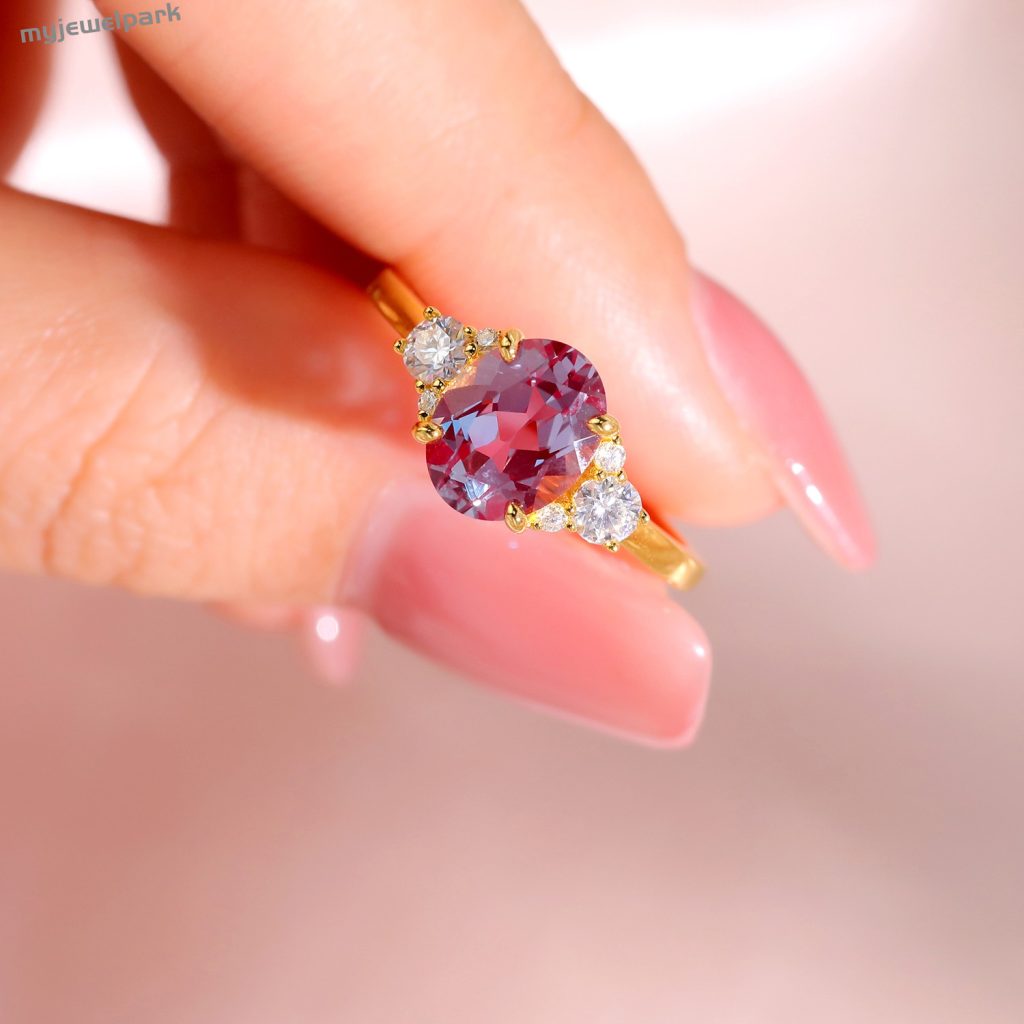
Nostalgia vs. Progress: The Market’s Tug-of-War
Traditional jewelers often resist labs, clinging to romantic tales of Earth’s artistry. @VintageGemTrader argued on Pricescope: “Natural alexandrite is history you can hold. Labs are just… science projects.” Yet, brands like Brilliant Earth and Chatham thrive by merging tech with luxury, offering lab stones at 90% off natural prices.
Instagram designer @RebelJewels shared: “Clients love that they can get the ‘czar experience’ without the czar budget—or the ethical baggage.”
The Future: Bridging Two Worlds
Lab-grown alexandrite doesn’t erase history—it expands it. With inclusions now replicated and color shifts sharper than ever, the line between “natural” and “cultured” blurs. Collectors may still covet Earth’s creations, but labs democratize access, proving luxury needn’t cost the planet.